

Services · Container Moving Challenges

Moving a Shipping Container Without a Crane

Moving a shipping container without a crane is often possible when the problem is reach, set-up space or access rather than the container itself. MOVER™ uses specialist container moving machinery, operated by a trained team, to move and position containers at ground level where a crane cannot reach or cannot set up safely.

This is not a manual or equipment-free method, and not every stage of every job can avoid lifting equipment. What it can do is open up options when conventional lifting is the thing standing in the way.

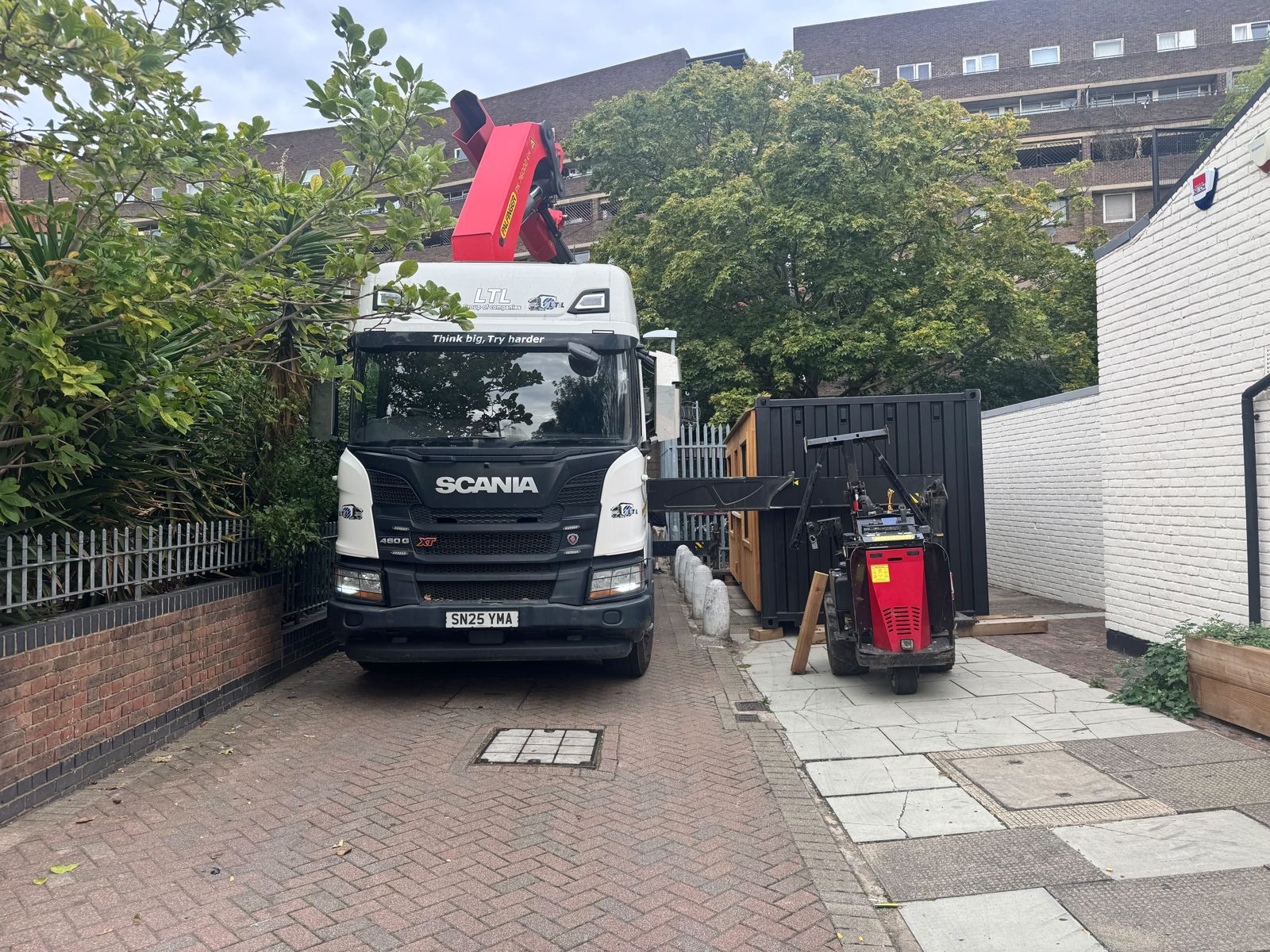
Lorry parked beside a building with container moving machinery nearby
01Specialist machinery
Ground-level movement using purpose-built equipment, not manual handling.
02Separate stages
Road transport, unloading and final positioning are planned as different steps.
03Honest scope
If a stage still needs lifting equipment, we will tell you.

Why crane access, reach or working space becomes the problem

A crane needs somewhere to stand, room to set up and a clear lift path to the final position. On many sites, one of those is missing.

  • The final position is too far from where the crane can stand.
  • There is not enough room to set up, or the ground cannot take the set-up loads.
  • Buildings, trees or overhead cables sit in the lift path.
  • The container needs to go behind a building, under cover or into a confined yard.
  • Road closures, permissions or disruption make a lift impractical for a short move.
Where specialist on-site positioning can help

MOVER™ moves containers at ground level from a point that can be reached to the position where they need to be. That might be from a delivery point at the front of a site to a yard at the back, from one side of a storage site to the other, or into a gap that a crane could not reach.

Whether it is suitable depends on the route, the ground and the final position, so every job is assessed first.

Road transport, unloading and final positioning

It helps to think of a container move as up to three separate stages. Being clear about which ones you need makes it much easier to plan.

  • Road transport: getting the container to the site, by your supplier, a haulier or our parent group’s standard haulage.
  • Unloading: taking the container off the vehicle at a point the vehicle can safely reach. Depending on the job, this may still involve lifting equipment.
  • Movement to the final position: the stage where a crane often struggles, and where specialist on-site positioning can help.
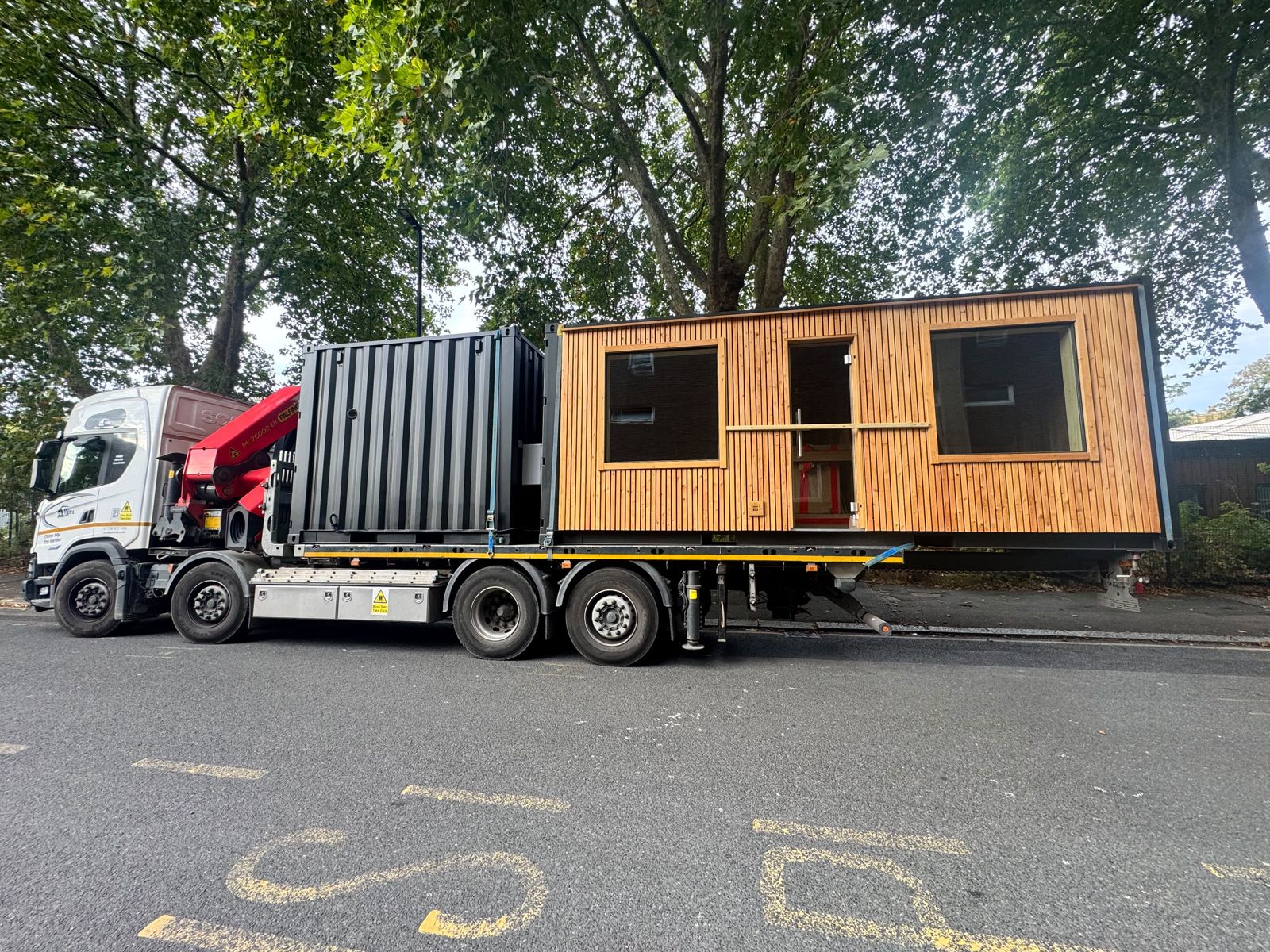
Lorry carrying a converted cabin unit
Road transport is one stage. Getting the unit to its final position can be another.

What MOVER™ is, and what it is not

People search for ways to move a container “by hand” or “without heavy equipment” because they cannot get a crane in. MOVER™ is not manual handling and it is not equipment-free. It is specialist machinery, used by a trained team, with a planned and assessed method.

We do not publish DIY instructions for moving shipping containers. They are heavy, and moving one without the right equipment and planning puts people and property at risk.

Before you enquire

What we need to assess a move without a crane

The key is understanding where a vehicle can reach and where the container needs to end up.

  1. 01Where a delivery vehicle can safely stop, if the job includes transport.
  2. 02Where the container needs to go, and why a crane cannot reach it.
  3. 03The route between those points, with widths, turns and height restrictions.
  4. 04Ground surfaces and slopes along the route.
  5. 05Whether the container is empty, contains items or you are unsure.
  6. 06Photographs of the route and the final position.

What do you need to move?

Tell us what you’re moving, where it needs to go and what’s making the move difficult. We’ll review the details and help you work out the next step.

The assessment

How we assess a move without a crane

We work out which stages need what, before anything is booked.

  1. 01

    Separate the stages

    We identify whether you need transport, unloading, on-site movement or a combination.

  2. 02

    Check the route

    We look at the route, ground and final position using your details and photos, and visit where needed.

  3. 03

    Explain the method

    We tell you which stages we can cover and whether any still need lifting equipment.

FAQs

Frequently asked questions

Can a shipping container be moved without a crane?

Often, yes, for the movement to its final position. MOVER™ uses specialist ground-level machinery to move containers where a crane cannot reach or set up. Some stages, such as unloading from a vehicle or stacking, may still need lifting equipment, so each job is assessed first.

Can a shipping container be moved by hand?

Shipping containers are far too heavy to move safely by hand. When people ask this, they usually mean moving one without a crane. MOVER™ does that using specialist machinery and a planned method, not manual handling.

What are the options when conventional lifting equipment cannot access the site?

The usual approach is to unload the container where a vehicle can safely reach, then move it to the final position using specialist on-site equipment. Whether that works depends on the route and ground, which is what we assess.

Will my job avoid lifting equipment completely?

Not necessarily. Some jobs can, others still need lifting at one stage, such as unloading. We will be clear about which stages we can help with once we understand the site.

Where we work

Container moving without a crane near you

MOVER™ is based in Stoke-on-Trent, Staffordshire, and works across Staffordshire and the Midlands. Our case studies also include projects further afield, so if your site is elsewhere in the UK, tell us where it is and we will let you know whether we can help.

Crane cannot reach?

Tell us where the container is, where it needs to go and why lifting is a problem. We will review the details and explain the next step. Use What do you need to move? to get started.