

Services · Container Moving Challenges

Moving a Container in Tight or Restricted Access

Moving a container in tight or restricted access is where MOVER™ spends much of its time. Narrow entrances, sharp turns, overhead obstructions and final positions squeezed between buildings can rule out a standard delivery, but they do not always rule out the move.

We cannot promise to fit through any gap. What we can do is look carefully at the whole route and the final position, and tell you honestly what looks realistic.

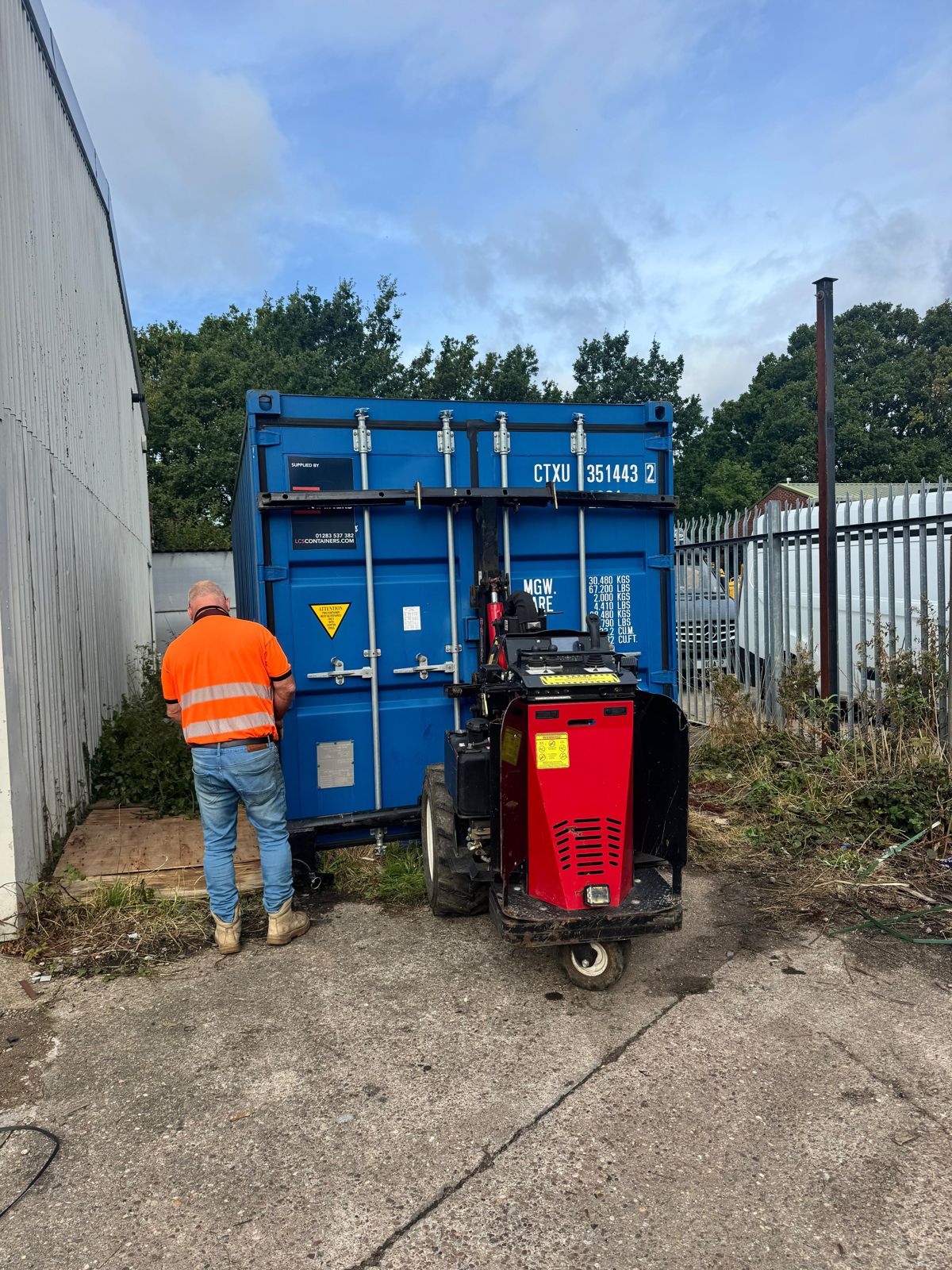
Blue shipping container positioned between two buildings
01Whole-route view
The narrowest point is not the only one that matters.
02Final position
Tight end positions are assessed as carefully as the route.
03No blanket claims
Every gap and turn is assessed. We will not promise to fit anywhere.

Constrained access routes

Restricted access container moving usually starts with a route that a delivery lorry cannot follow: a path between buildings, a service road, a yard behind a shop or a lane with no room to turn.

We look at the route from start to finish, including how the container gets onto it and what happens at the far end.
Narrow entrances and obstacles

Common obstacles on tight-access jobs include:

  • Gateways, gate posts and narrow openings between walls or buildings.
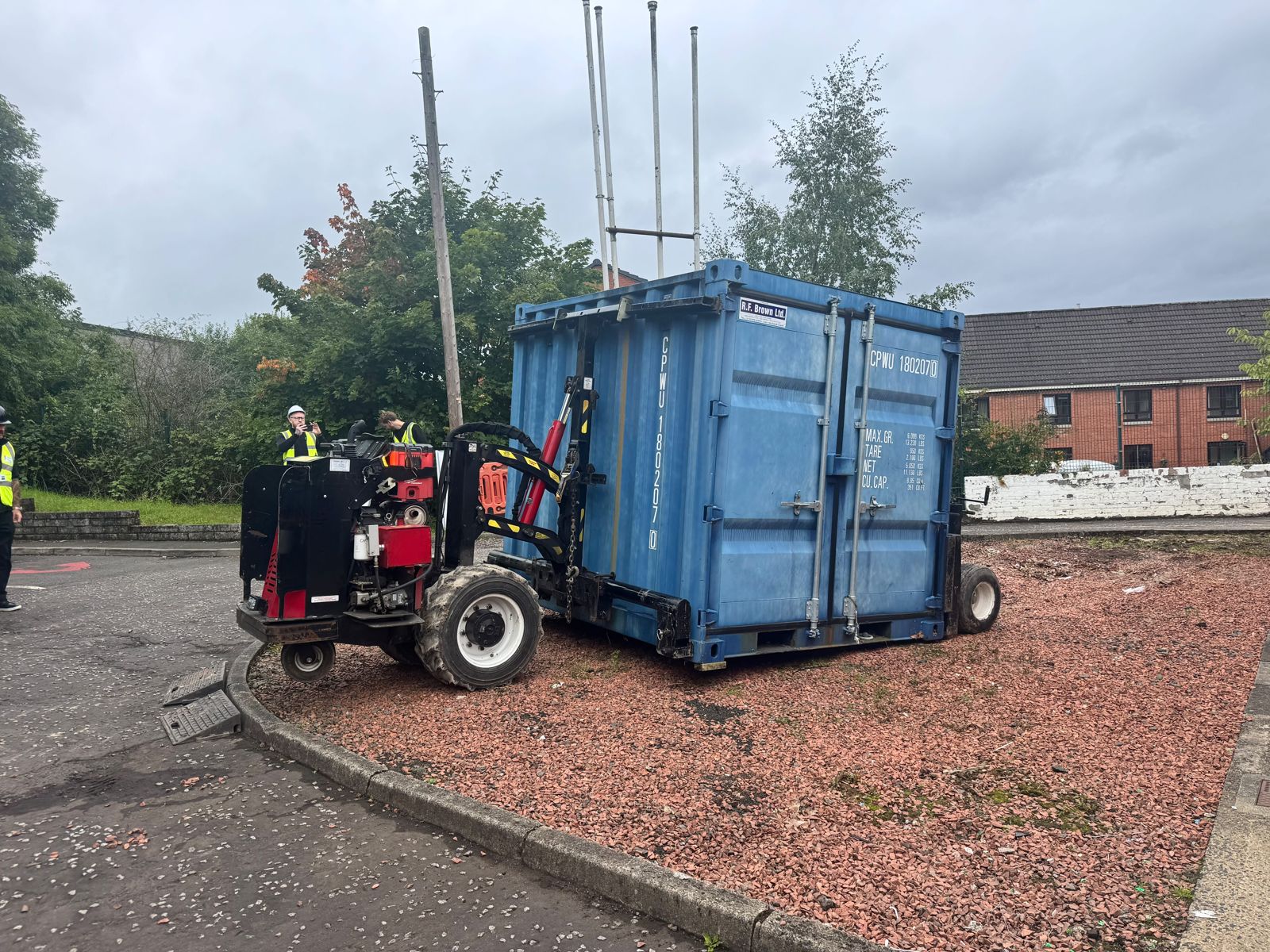
  • Kerbs, bollards, steps and changes of level.
  • Overhanging trees, canopies, cables and low bridges.
  • Parked vehicles, fixed equipment or other units that cannot be moved.

Manoeuvring space and changes of direction

Turns are often harder than straight gaps. A container needs room to swing at each change of direction, and a longer unit needs more of it. Tell us where the route turns and how much open space there is around each corner.

Tight final positioning

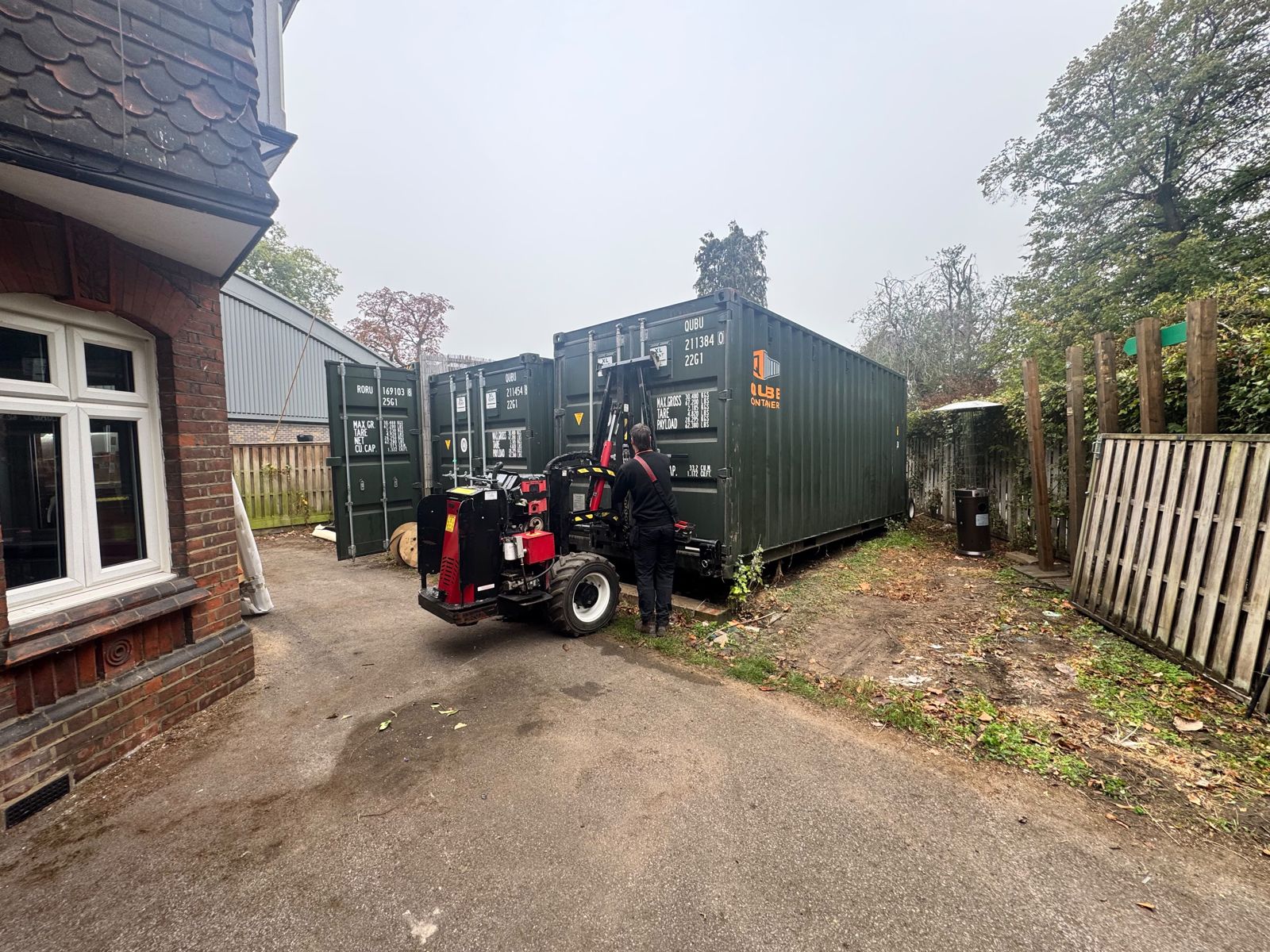
The final position is often the tightest part of the job. The container may need to sit against a wall, between two units or beside a fence, with its doors facing a particular way.

We need to know how close it must sit to its neighbours, which way the doors need to open and whether anything nearby is fragile or must stay in place.

Shipping container next to a house and a wooden fence
Final positions beside homes and boundaries need careful measuring.

How the route and final position affect the assessment

The route tells us whether the container can reach its destination. The final position tells us whether it can be placed and aligned once it gets there. Both have to work, which is why we ask about both before suggesting a method.

Blue shipping container beside a kerb and gravel surface
Kerbs and changes of surface are part of the route assessment.
Before you enquire

Useful measurements and photographs

A tape measure and a phone camera go a long way. Rough figures are fine to start.

  1. 01Width of every narrow point, including gates and gaps between buildings.
  2. 02Height of any overhead restrictions such as trees, cables, canopies or bridges.
  3. 03Where the route changes direction, and the open space at each turn.
  4. 04The size of the final position and how close the container must sit to walls or other units.
  5. 05Photos from the entrance looking along the route, and from the final position looking back.
  6. 06Anything on the route that cannot be moved, such as fixed equipment or parked vehicles.

What do you need to move?

Tell us what you’re moving, where it needs to go and what’s making the move difficult. We’ll review the details and help you work out the next step.

The assessment

How we assess restricted access

Tight-access jobs are judged on detail, so we take the time to get it right.

  1. 01

    Map the route

    We work through your measurements and photos from entrance to final position.

  2. 02

    Identify pinch points

    We highlight the narrowest gaps, tightest turns and any overhead issues.

  3. 03

    Advise on the next step

    We tell you what looks realistic and whether a site visit is needed.

FAQs

Frequently asked questions

Can you fit a container through any gap?

No. Nobody can honestly promise that. We assess the width, height, turns and ground on your route before saying whether a move looks realistic.

What measurements should I take for a tight-access move?

The width of each narrow point, the height of any overhead restrictions, the space at each turn and the size of the final position. Rough measurements are a helpful start.

Are photographs useful?

Very. Photos from the entrance looking along the route, and from the final position looking back, often tell us more than measurements alone. Mention in the guide that you have photos and we will ask for them when we contact you.

Can you work on a live site?

Our case studies include supermarkets, colleges and shopping centres that stayed open during the work. Live sites need extra planning, so tell us about vehicle and pedestrian activity when you get in touch.

Where we work

Restricted access container moving near you

MOVER™ is based in Stoke-on-Trent, Staffordshire, and works across Staffordshire and the Midlands. Our case studies also include projects further afield, so if your site is elsewhere in the UK, tell us where it is and we will let you know whether we can help.

Tight access on your site?

Tell us about the route and the final position. We will review the details and help you work out the next step. Use What do you need to move? to get started.