

Services · Container Moving Challenges

Moving a Shipping Container Inside a Building or Warehouse

Moving a container inside a building brings a different set of questions from an outdoor move. Door heights, floor loading, internal space and ventilation all need answers before anyone can say whether a move is realistic. MOVER™ can assess internal moves and repositioning where conventional cranes or forklifts cannot be used.

We do not guarantee that any floor or doorway will be suitable. We will tell you what information is needed, and in some cases that will include input from the building owner or a structural engineer.

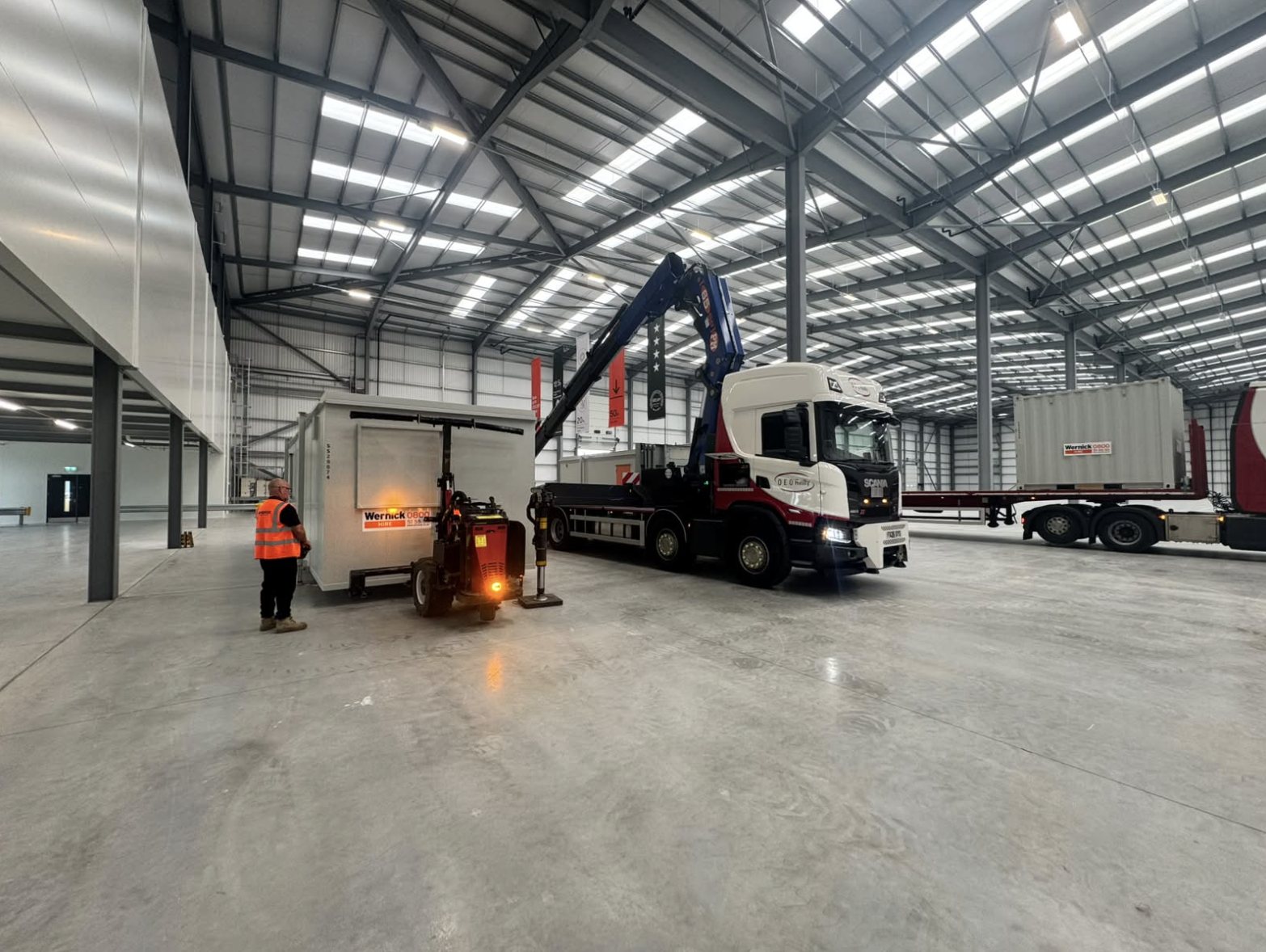
MOVER machinery beside a portable cabin and crane lorry inside a warehouse
01Entrance dimensions
Door heights and widths, thresholds and the approach are measured first.
02Floor loading
Floor suitability is never assumed. We may need building or engineering information.
03Ventilation
Our machinery is petrol powered, so ventilation and emissions are assessed for any indoor work.

Internal moves and repositioning

Moving a shipping container inside a warehouse might mean bringing it in from outside, repositioning it within a building or taking it out again. Storage operators, manufacturers and businesses using containers as internal rooms or stores all have reasons to move them indoors.
Building and warehouse access

The approach to the building matters as much as the door. We need to know how the container reaches the entrance, whether there is a ramp, step or threshold, and what the ground is like outside.

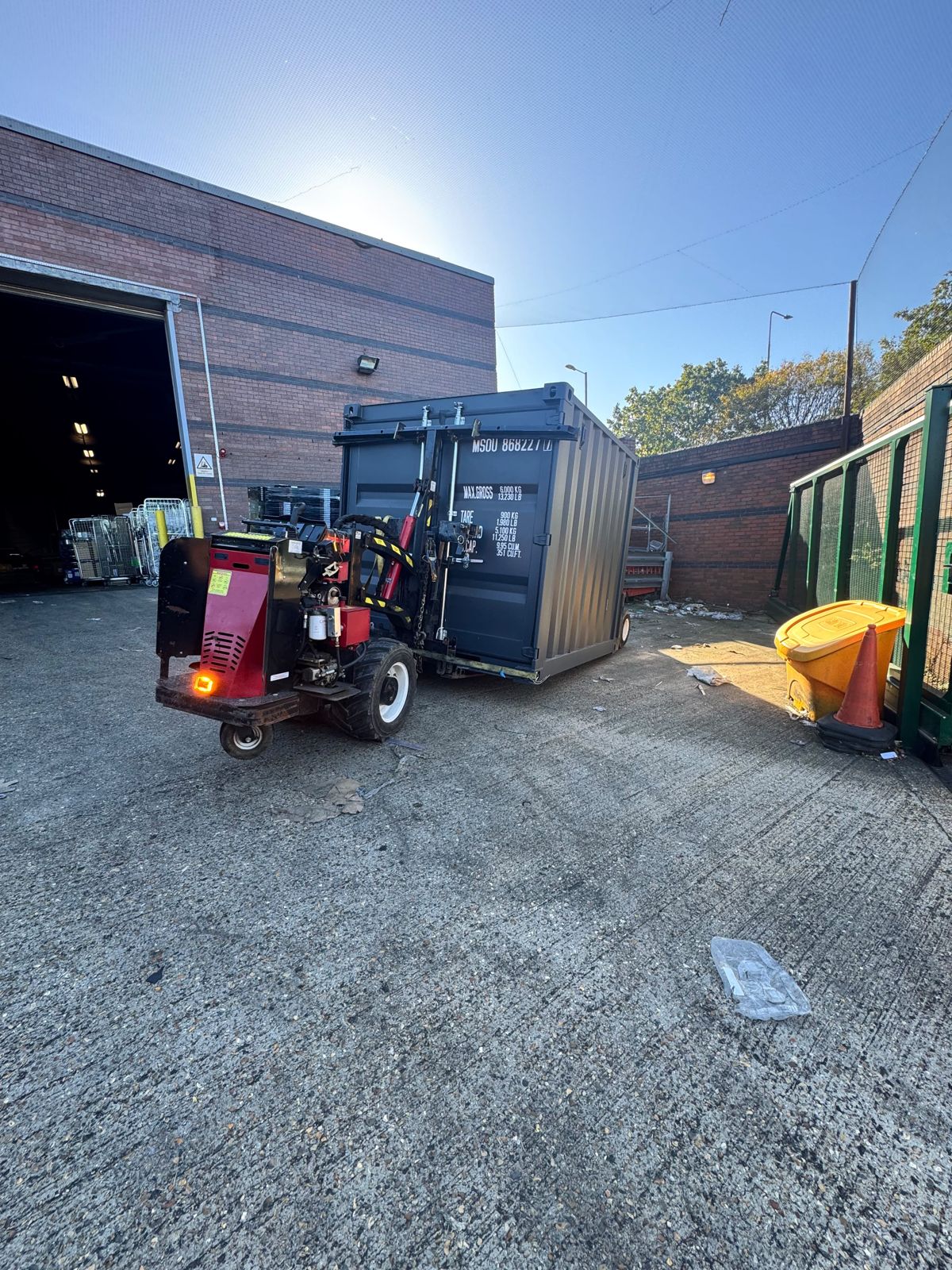
Shipping container outside the open entrance of a workshop building
Outside an open workshop entrance. The opening, approach and threshold are measured before any internal move is considered.

Door heights and entrance dimensions

Measure the clear width and clear height of the opening, with any roller shutter fully raised, and note anything that reduces the space such as door tracks, sensors, lighting or sprinkler pipes. Tell us about any turn the container needs to make immediately inside the door.

Floor suitability and loading

A floor that copes with everyday traffic may not be suitable for a container and the machinery moving it. We cannot confirm floor suitability ourselves. Where loading is uncertain, we may ask for information from the building owner, facilities team or a structural engineer before a method is agreed.

Floor finish matters too. Coatings, joints, drainage channels and covers along the route should be mentioned.

Ventilation and emissions

MOVER™ machinery is petrol powered. Any indoor move needs a look at ventilation, exhaust emissions, how long the machine would run inside and the building’s own rules. Some buildings will need extra ventilation or a different approach, and some indoor moves may not be suitable at all.

Internal manoeuvring space and the final position

Inside, columns, racking, mezzanines, overhead services and stored stock all reduce the usable space. The final position needs room to approach and align the container, and enough space for its doors to open.

Where conventional cranes cannot work under a roof, or forklifts are not suitable for the container, specialist ground-level positioning may be worth assessing.

Before you enquire

Information needed for an indoor assessment

Indoor moves need more detail than most. Share what you have and we will ask for the rest.

  1. 01Clear width and height of the entrance, with shutters fully raised.
  2. 02The route inside, including columns, racking and overhead services.
  3. 03Floor construction and any known loading information, if available.
  4. 04Ventilation in the building and any rules about running machinery indoors.
  5. 05The final position, its size and where the doors need to face.
  6. 06Whether the container is empty or contains items.

What do you need to move?

Tell us what you’re moving, where it needs to go and what’s making the move difficult. We’ll review the details and help you work out the next step.

The assessment

How we assess an indoor move

Indoor work is assessed carefully, and sometimes with input from the building owner.

  1. 01

    Gather building details

    We ask about doors, floors, ventilation and internal layout.

  2. 02

    Identify open questions

    We flag anything that needs confirming, such as floor loading or emissions, before a method is discussed.

  3. 03

    Explain the next step

    We tell you whether the move looks realistic, what is still needed and whether a site visit is required.

FAQs

Frequently asked questions

Can you move a container inside a warehouse?

It can be possible, depending on the entrance, the floor, ventilation and internal space. We assess each building before saying whether an indoor move looks realistic.

How do I know if my floor can take the load?

We cannot confirm floor suitability ourselves. Your building owner, facilities team or a structural engineer may hold that information. If it is unknown, tell us and we will explain what we would need.

Is your machinery suitable for use indoors?

MOVER™ machinery is petrol powered, so ventilation and emissions must be assessed for any indoor work. Some buildings will be suitable with the right precautions; others may not be.

What door size do I need?

We do not publish a minimum. Send us the clear width and height of the opening with any shutter fully raised, plus anything that reduces it, and we will assess it alongside the rest of the route.

Where we work

Indoor container moving near you

MOVER™ is based in Stoke-on-Trent, Staffordshire, and works across Staffordshire and the Midlands. Our case studies also include projects further afield, so if your site is elsewhere in the UK, tell us where it is and we will let you know whether we can help.

Container to move inside?

Tell us about the building, the doors and the final position. We will review the details and help you work out the next step. Use What do you need to move? to get started.